Tuesday, November 17

With Owen Lencki, co-founder of Vaelro.
How to think about it
Sounds just as sure when it's guessing.
Great first drafts. Never the final draft.
Always check its work.
Context is king. Tell it more, get more.
It aims to please. Ask it to argue the other side.
The Super Bowl test
Factual
“Who won the last five Super Bowls?”
Same answer. Every single time.
Open-ended
“Who wins next year?”
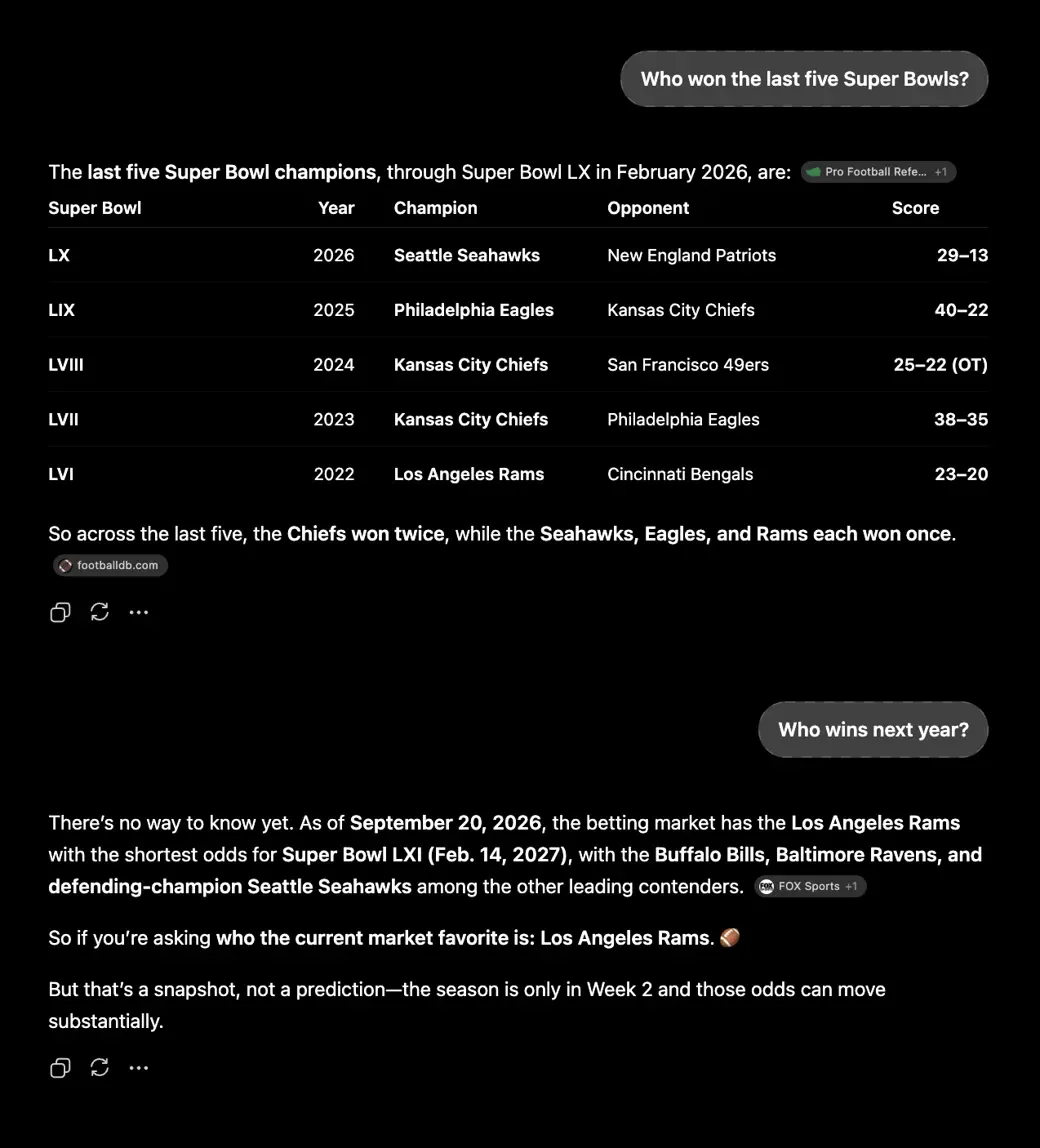
- Try 1: Rams.
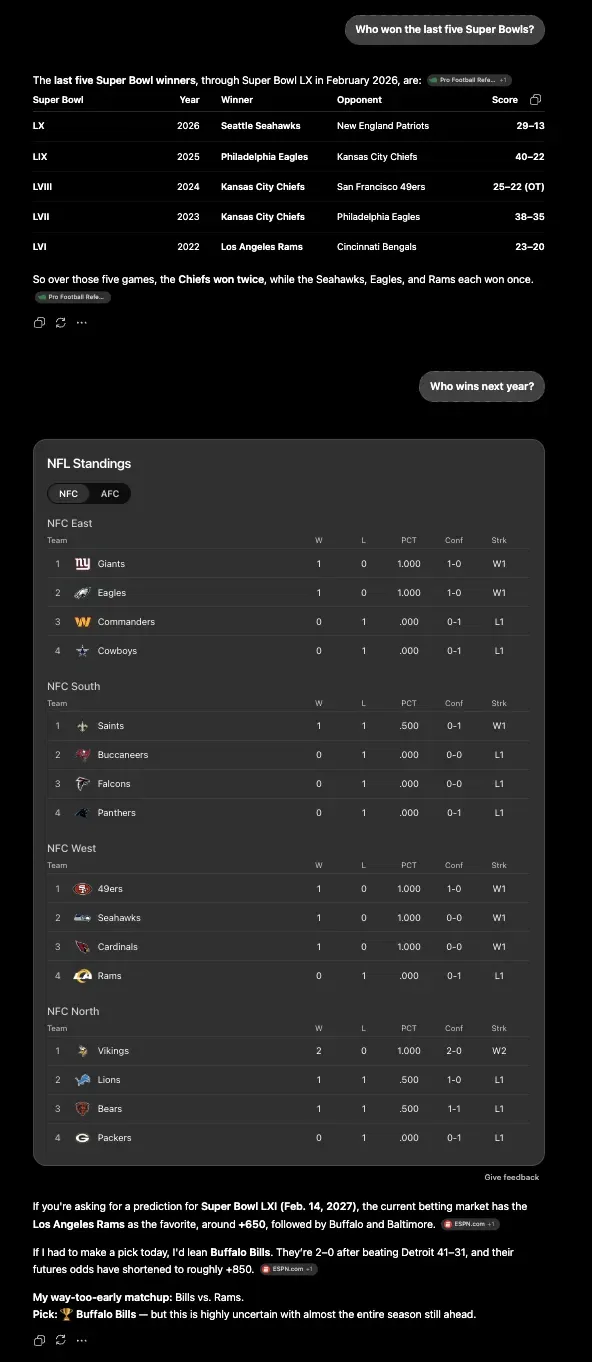
- Try 2: Bills.
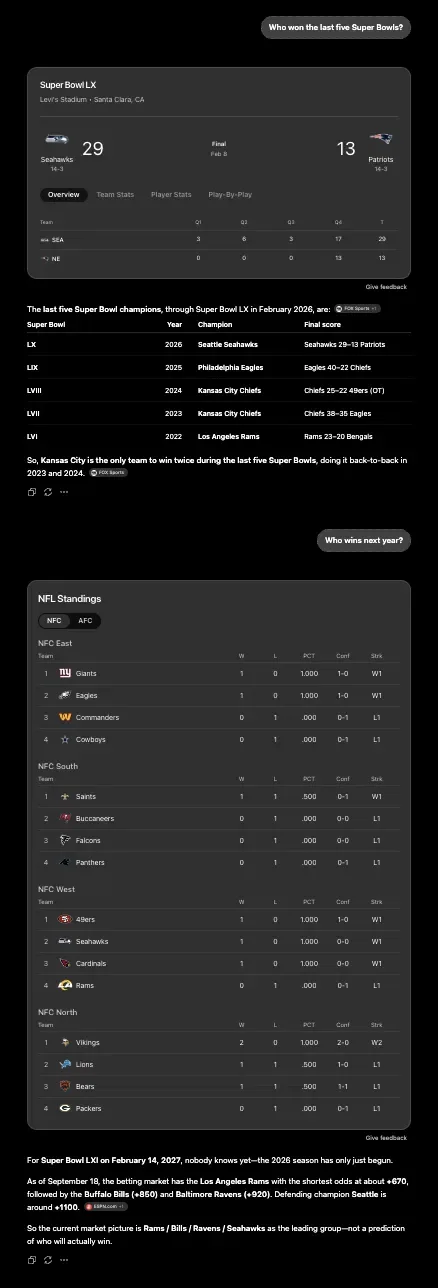
- Try 3: "Rams, Bills, Ravens or Seahawks."
Three different picks. It never said it was guessing.
Try 1
Tap to enlarge (opens in a new tab)
Try 2
Tap to enlarge (opens in a new tab)
Try 3
Tap to enlarge (opens in a new tab)
The more open the question, the more you need to check the answer.
Where it saves time today
Emails and quotes
A first draft in 30 seconds, not 30 minutes.
Review replies
Turn a 1-star review into a calm, professional reply.
Job posts
A posting that sounds like your business, not a template.
Social media
A week of captions in ten minutes.
Documents
Paste a contract or policy, get plain English back.
Follow-ups
Draft the email you keep meaning to send.
Who does what
Good at
- First drafts.
- Sorting a messy inbox.
- Summarizing.
- Reading handwriting.
- Helping build tools, fast.
Keep this yours
- Your trade.
- Your judgment.
- Your numbers.
- Your customers' trust.
Most of what we build doesn't run on AI at all. AI helps us build it fast.
Privacy
Never paste a customer's name, phone number, address or card number into a free AI tool.
ChatGPT
Turn off "Improve the model for everyone."
Claude
Turn off "Help improve our AI models."
Gemini
Turn off "Keep Activity."
Copilot
The new app has no switch. Microsoft says chats aren't used to train its core models.
Setting names as of November 2026. Apps rename these, so look for the one about improving or training the model.
How to ask
Most people try it once, get a bad answer, and quit. The bad answer was the question.
Try this first
“Help me learn how to use you.”
It will interview you about your business, then teach itself to you. Works in every tool.
Habits
Tell it about your business first.
Let it interview you once. Paste that summary at the top of every chat.
Say who it's for.
"For my crew" and "for a first-time customer" get different drafts.
Paste your own writing.
Two or three emails you've sent. It will start to sound like you.
Ask for a short draft, then react.
"Shorter." "Warmer." "Less salesy."
Say the length and the shape.
"One text." "Three bullets." "Under a page."
Prompts
“Before you write anything, ask me questions one at a time until you have what you need. Then give me a draft.”
Paste it at the end of any request, in any tool.
After Session 1
We read every packet.
Looking for the patterns across every business in the room.
We build the fixes.
Free do-it-yourself options, and done-for-you ones.
December 8: We show you.
Walkthroughs built from what you wrote.
Upload photos of pages 2, 3 and 4 of your worksheet by Friday, November 20.
Upload your worksheet (opens in a new tab)Your summary arrives a few days before December 8, with a link to book a free follow-up call.